






STÉNOPÉ CMP ST-810
PINHOLE CAMERA
TRUE 8×10" LARGE FORMAT
80 mm ULTRA-WIDE ANGLE
ONLY 485 g – ULTRA-LIGHTWEIGHT
new nano-tube-based internal coating
99.6% absorption of internal light reflections
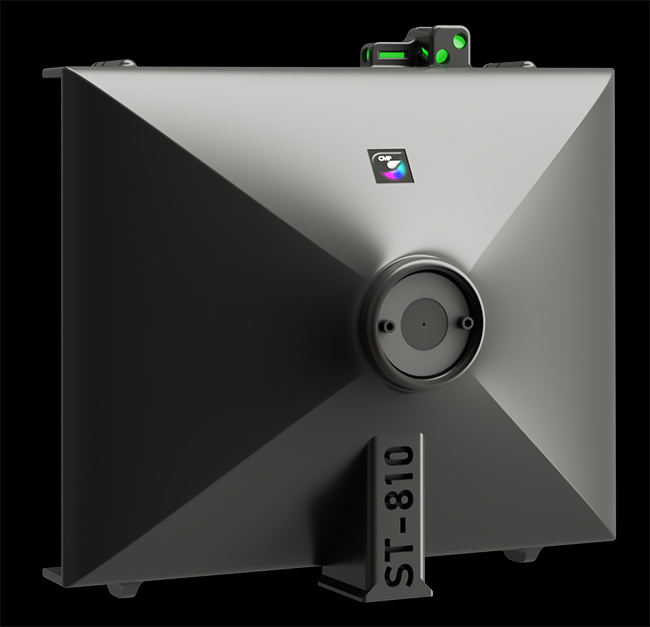
 CMP ST-810 – 8×10 Large Format Pinhole Camera
The CMP ST-810 is a precision pinhole camera designed for 8×10 large format photography. Its 80 mm focal length provides an extremely wide 127° diagonal field of view, while the f/216 aperture produces the characteristic rendering of pinhole photography.
Designed to accept standard 8×10 film holders, the ST-810 combines the simplicity of pinhole photography with a lightweight and practical design, making it suitable for both studio and outdoor photography.
In a world where everything moves ever faster, the 8×10 pinhole camera invites you to slow down—to take the time to observe the light, compose your image, and reflect before every exposure. Rather than pursuing the technical perfection of a modern lens, pinhole photography offers a unique aesthetic, defined by gentle sharpness, remarkable depth, and a timeless atmosphere that no other photographic technique can replicate.
Combined with the prestigious 8×10 inch format, it reveals the full richness of large-format photography. The exceptionally large negative delivers outstanding detail, beautifully smooth tonal transitions, and unparalleled depth in the shadows.
Designed and manufactured using today's technologies, and fully compatible with ANSI-standard 8×10 film holders, our camera brings together the best of two worlds: the authenticity of a photographic process that has endured for more than 150 years, and the precision of modern manufacturing.
Whether you are an experienced large-format photographer, a passionate practitioner of historic photographic processes, or simply curious to discover a different way of making photographs, welcome to the world of the CMP ST-810.
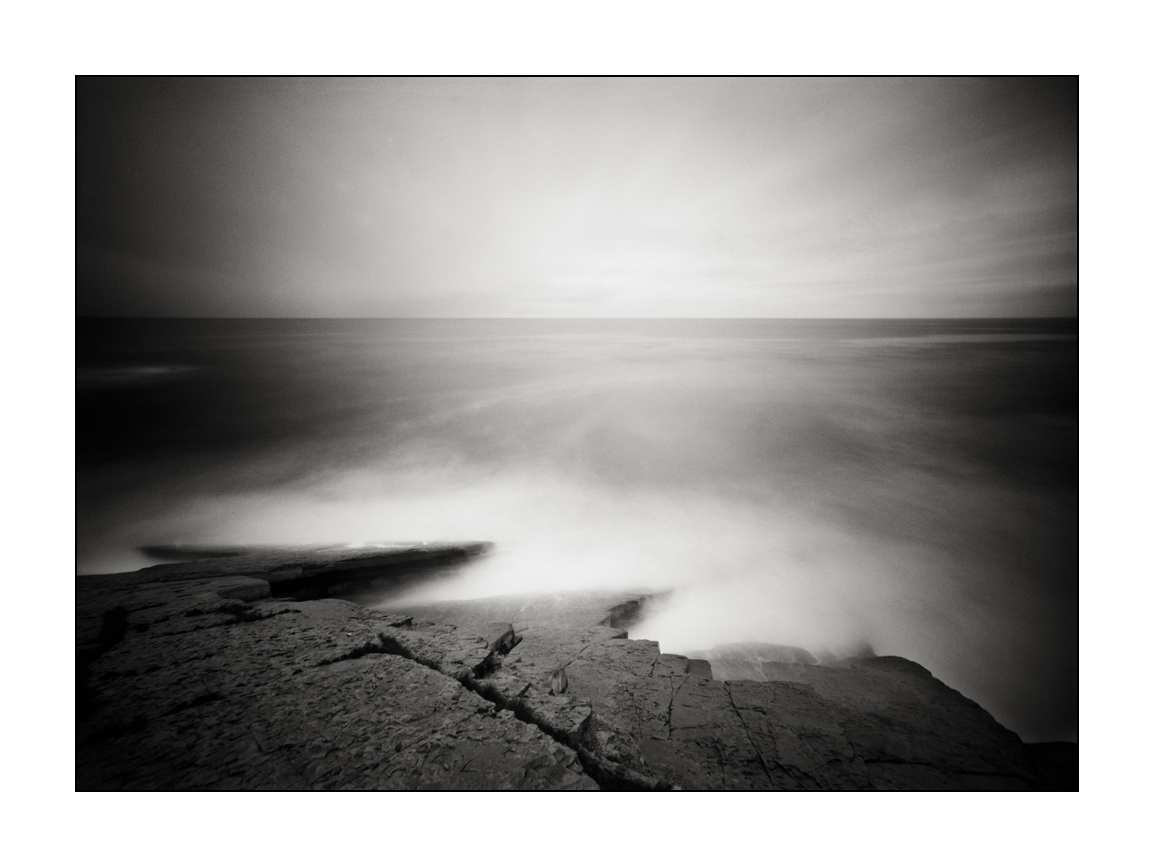
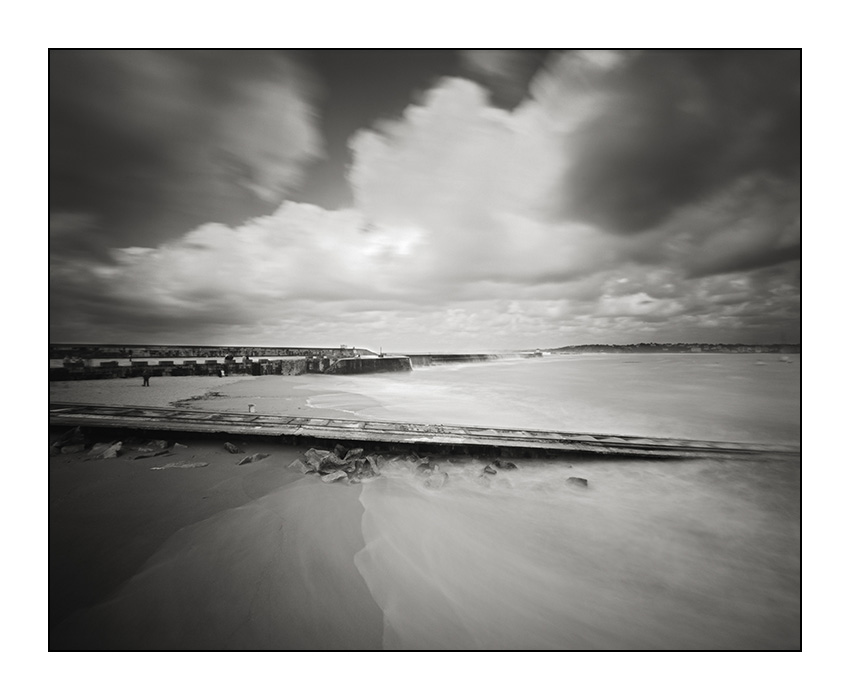
Route de la corniche, St Jean de Luz, Kodak TriX 320 8x10 sheet film, 22-minute exposure
Technical Specifications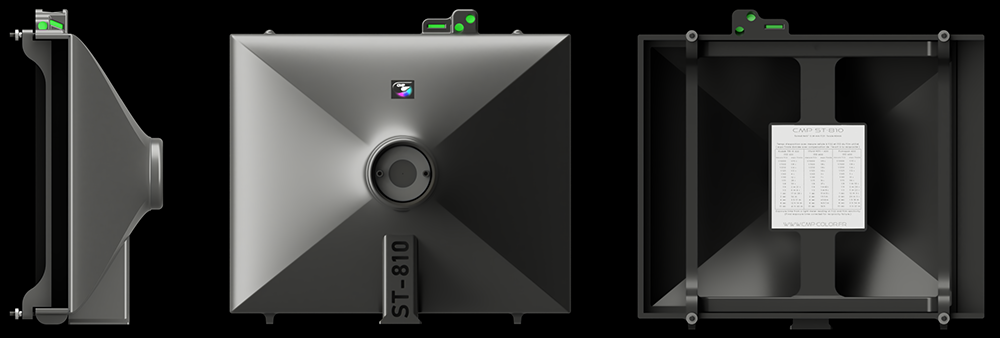
Design / 3D Modeling
CMP ST-810 8×10 Pinhole Camera
80 mm focal length • f/216 aperture
127° diagonal angle of view
(equivalent to an 11 mm lens in the 35 mm format)
The body of the CMP ST-810 is 3D printed from a biopolymer manufactured in Austria, made from 100% renewable, naturally derived organic compounds. The material is carbon-neutral, biodegradable, and fully aligned with today's environmental expectations.
To maximize rigidity while maintaining low weight, the material is reinforced with carbon fibers. A new nano-tube-based internal coating absorbs 99.6% of internal light reflections. A deep matte black paint based on silicone resin finishes the external finish of the camera.
The CMP ST-810 measures 279 × 303 × 128 mm (11.0 × 11.9 × 5.0 in) and weighs only 485 g (17.1 oz), making it remarkably compact and lightweight for an 8×10 inch camera.
It is compatible with standard ANSI 8×10 inch film holders, including Fidelity, Lisco, and many others. An Arca-Swiss Classic compatible dovetail is integrated directly into the camera body, providing an exceptionally secure tripod attachment. This mounting system has become the professional standard for photographers worldwide.
An optional adapter is available for tripods using the traditional Kodak tripod thread.
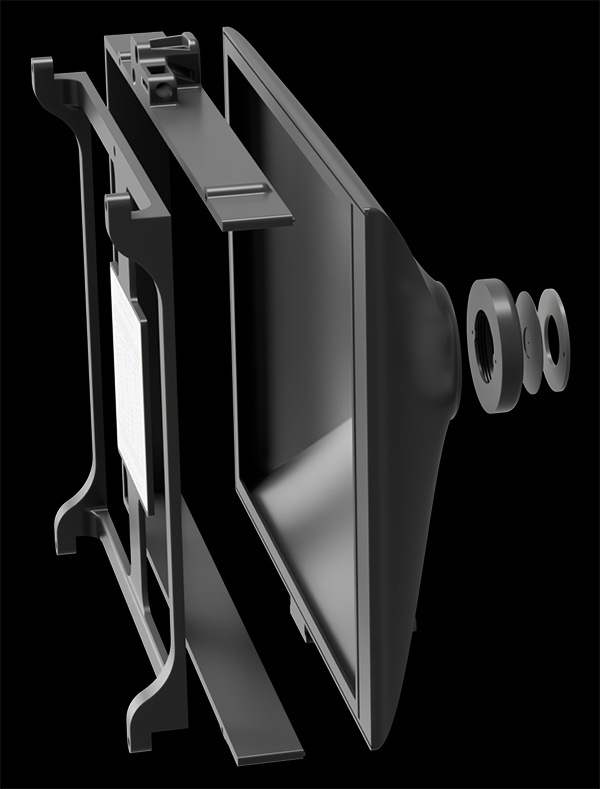
With its 80 mm focal length on the 8×10 inch format, the CMP ST-810 provides an exceptionally wide 127° diagonal angle of view (115° horizontal and 103° vertical), equivalent to an 11 mm lens in the 35 mm format. Depth of field is effectively infinite, and because the imaging system contains no lens elements, the resulting image is completely free from optical distortion. As with all pinhole cameras, there is no viewfinder. Composition therefore relies entirely on the built-in spirit levels located on the top of the camera. The CMP ST-810 incorporates three precision spirit levels:
- one horizontal level, used to keep the horizon perfectly level.
- two offset vertical levels, specially calibrated for composition. The angle of each level has been carefully calculated so that the left level indicates when the horizon will appear on the upper third of the final image or the right level indicates when the horizon will appear on the lower third of the photograph.
These two composition guides provide a simple and effective way to apply the rule of thirds without the need for a viewfinder, making it easy to position the horizon accurately in either the upper or lower third of the frame.

The pinhole—the tiny aperture through which light enters the camera—is manufactured by the French company SténoCaméra, widely recognized for producing some of the finest precision pinholes available.
Its 0.37 mm diameter has been carefully selected to provide the optimum balance between sharpness and diffraction for the 80 mm focal length and the 8×10 inch film format used by the CMP ST-810.
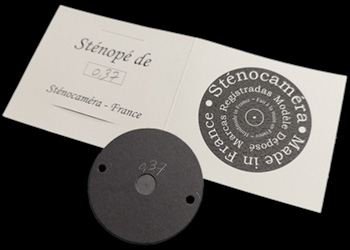
8×10 inch film holders (not supplied) can be loaded with color negative film, black-and-white negative film, or even direct positive black-and-white photographic paper.
8×10 Large Format PhotographyThe CMP ST-810 is fully compatible with products such as Harman Direct Positive Paper and Imago BW Direct Positive Paper, allowing photographers to produce a unique black-and-white positive original directly, without the need to create a negative first.

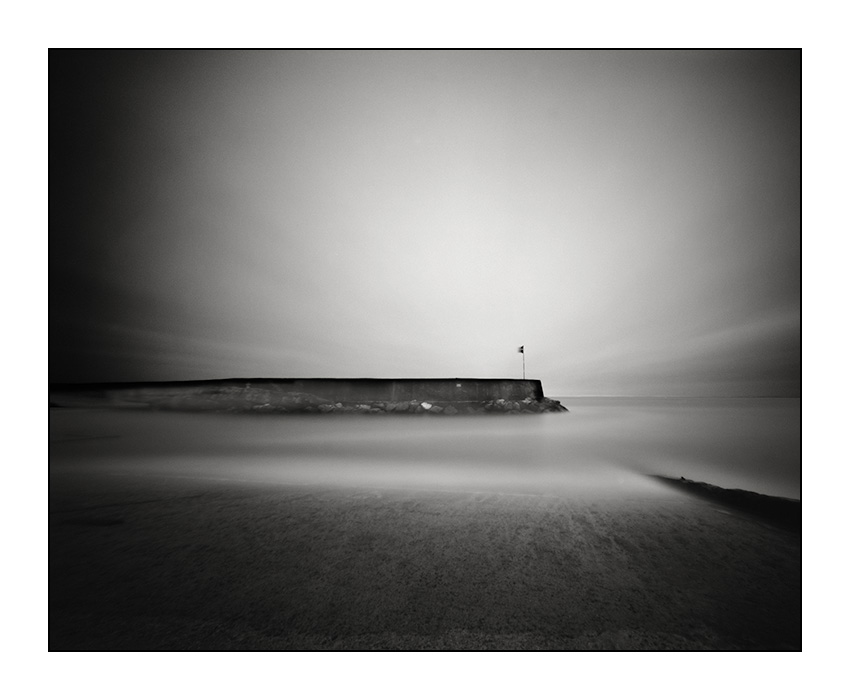
Guéthary, French Basque Coast
Kodak Tri-X 320 8×10 sheet film
14-minute exposure
Reciprocity FailureYou have probably noticed that the CMP ST-810 is not equipped with a shutter. Instead, it relies on the traditional lens cap method, a technique that has been used by photographers for well over a century.
To make an exposure, the cap covering the pinhole is removed after the film holder dark slide has been withdrawn. Exposure begins the moment the pinhole is uncovered. At the end of the exposure, the cap is replaced over the pinhole before the dark slide is reinserted into the film holder.
With exposure times ranging from just a few seconds in bright sunshine to several minutes under overcast skies, manual timing to within a second is more than adequate.
To put this into perspective, imagine taking a light meter reading at f/8. Since the CMP ST-810 operates at f/216, this is equivalent to stopping down by an additional 9.5 stops beyond f/8.
If you are using photographic film, the calculated exposure time will almost certainly fall outside the film's reciprocity range. As a result, the exposure must be extended to compensate for the film's reciprocity failure, according to the characteristics of the film in use.
It is therefore quite common for final exposure times to reach several minutes. While these long exposures contribute greatly to the distinctive, timeless character of pinhole photographs, they also make accurate exposure calculations considerably more challenging.
|
Understanding Reciprocity and Reciprocity Failure (also known as the Schwarzschild Effect) |
|
|
In film photography, a photographic emulsion normally responds linearly to the amount of light it receives and the duration of the exposure. This means that:
This direct, linear relationship between the amount of light reaching the film and the exposure time is known as the reciprocity law. However, this law is valid only over a limited range of exposure times. At extremely short exposures (for example 1/10,000 s) and, more importantly for pinhole photography, at long exposures (for example 100 seconds), the film no longer responds linearly. The exposure indicated by the light meter must therefore be corrected. Film manufacturers usually specify the reciprocity range in the technical data sheet for each film. As long as the metered exposure falls within this range, no additional correction is required. Once the exposure time falls outside this range, the exposure must be increased to compensate for the film's reduced sensitivity. This phenomenon is known as reciprocity failure, also referred to as the Schwarzschild effect. |
|
|
|
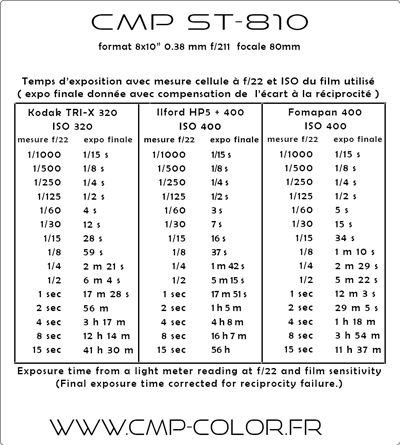
With a pinhole camera operating at f/216, exposure times very quickly fall outside the film's reciprocity range. To simplify exposure calculations in the field, the CMP ST-810 features a highly practical reference chart on the rear of the camera. Simply take a light meter reading using either a digital camera or a handheld light meter, setting the aperture to f/22 and the ISO to match the film you are using. Then, locate the exposure time indicated by your meter and read the corresponding corrected exposure time directly from the chart. For example:
These examples clearly illustrate how quickly reciprocity failure can increase exposure times. Applying the appropriate correction is therefore essential to achieve accurate exposures. The rear reference chart includes correction tables for three of the most widely used black-and-white films:
If you use other films, you can easily find their reciprocity data in the manufacturers' technical documentation. Kodak Professional technical data sheets: Ilford Photo technical data sheets: |
If you use an iPhone, the Pinhole Assist app is an outstanding companion for the CMP ST-810.
The app allows you to enter your pinhole camera's actual f-number, select the film you are using, and use the iPhone's built-in camera as a light meter. It then calculates the correct exposure time automatically, including reciprocity failure compensation.
For advanced users, the app even allows you to import or create custom reciprocity curves, making it compatible with virtually any photographic film.

Pinhole Assist app
Light metering
Automatic reciprocity failure compensation
If you use an Android smartphone, Pinhole Assist is unfortunately not available. However, free applications such as LightMeter Free by WB Photo can be used to take an accurate light meter reading.
You can then simply use the reading together with the reciprocity chart on the back of the CMP ST-810 to determine the correct exposure time.
Although this method is slightly less convenient than using Pinhole Assist on an iPhone, it is straightforward, reliable, and works perfectly well.
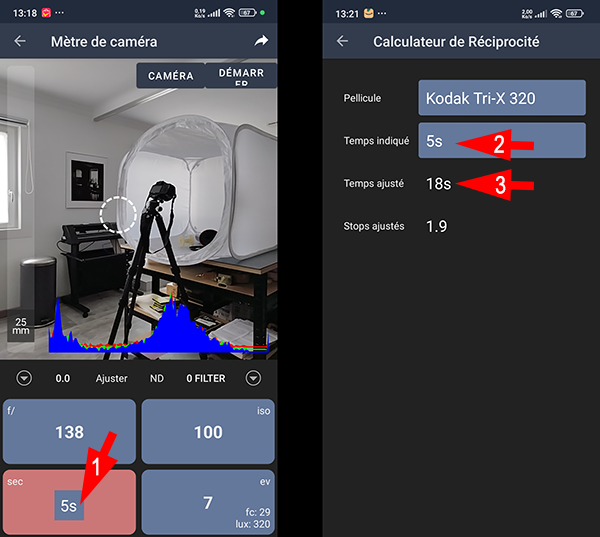
LightMeter Free by WB Photo for Android
The app is used as a light meter, providing the metered exposure time (red arrow 1).
This exposure time is then entered manually into the built-in reciprocity calculator (red arrow 2).
The app then displays the final corrected exposure time (red arrow 3).
In this example, the correct exposure for our pinhole camera (f/138, ISO 100, Kodak Tri-X 320) is 18 seconds.
The 8×10 Format: A Legacy of Photographic History
The 8×10 inch format (203 × 254 mm) is one of the most iconic photographic formats ever created. Its history is closely intertwined with the history of photography itself.
The 8×10 format emerged in the mid-19th century, shortly after the invention of photography. At the time, photographers worked with glass plates coated using the wet collodion process. Although plate sizes had not yet been standardized, the 8×10 inch format quickly established itself as an ideal balance between image quality and practical handling.
The Golden Age of Large Format (1880–1930): With the introduction of dry plates, followed by sheet film, 8×10 became the benchmark large-format standard. The exceptionally large negatives made it possible to produce outstanding contact prints without any enlargement, preserving every detail and tonal nuance.
The 8×10 format is closely associated with some of photography's greatest masters: Ansel Adams, renowned for his breathtaking Yosemite landscapes; Edward Weston, celebrated for his still lifes and nudes; Irving Penn, whose remarkable portraits were often made with an 8×10 camera; and Richard Avedon, creator of some of the most iconic portraits in photographic history. Together, these photographers helped establish the 8×10 format as the ultimate symbol of uncompromising image quality.
Today, the 8×10 format remains a benchmark in fine-art and large-format photography. Its exceptionally large sheet film—four times the area of 4×5 and approximately sixty times the area of a 35 mm (24×36 mm) frame—delivers extraordinary tonal depth, exceptionally smooth gradations, and unparalleled richness in shadow detail.
More than 150 years after its introduction, the 8×10 format continues to embody the very essence of large-format photography. Its legacy is inseparable from a thoughtful, deliberate approach to image-making, exceptional image quality, and a tradition of craftsmanship that continues to inspire photographers around the world.
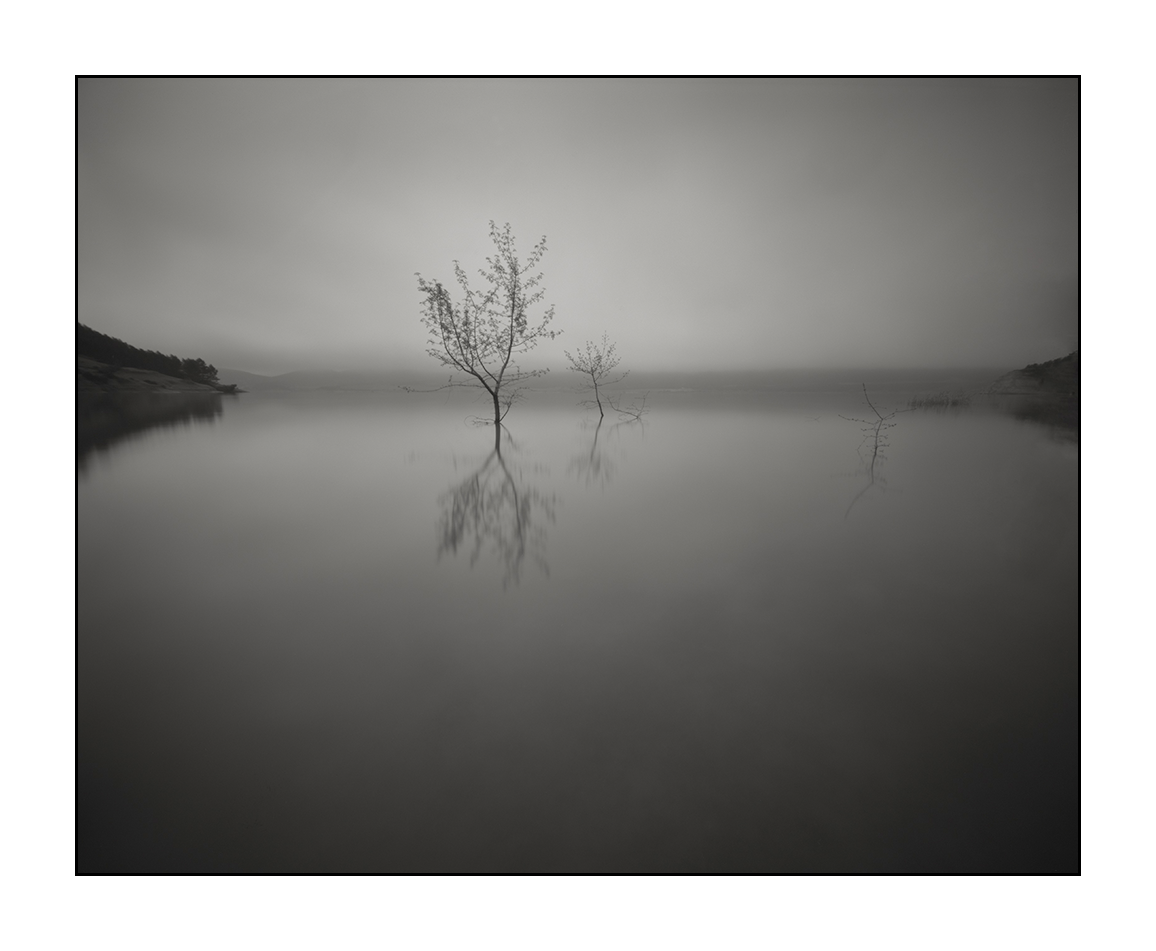
Embalse de Yesa, Spain – Fomapan 400 8x10 sheet film – 12-minute exposure
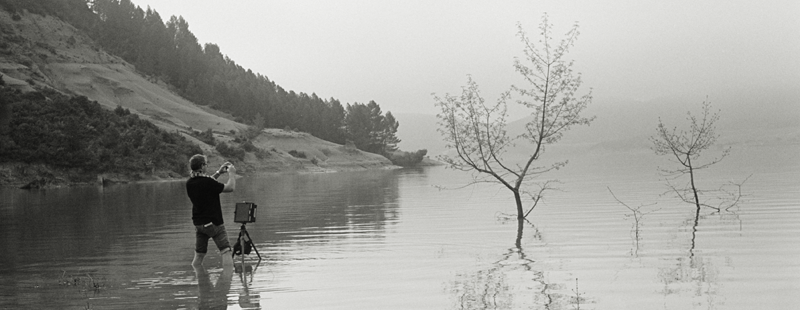
Yours truly, standing in the water while making this photograph :-)
Pricing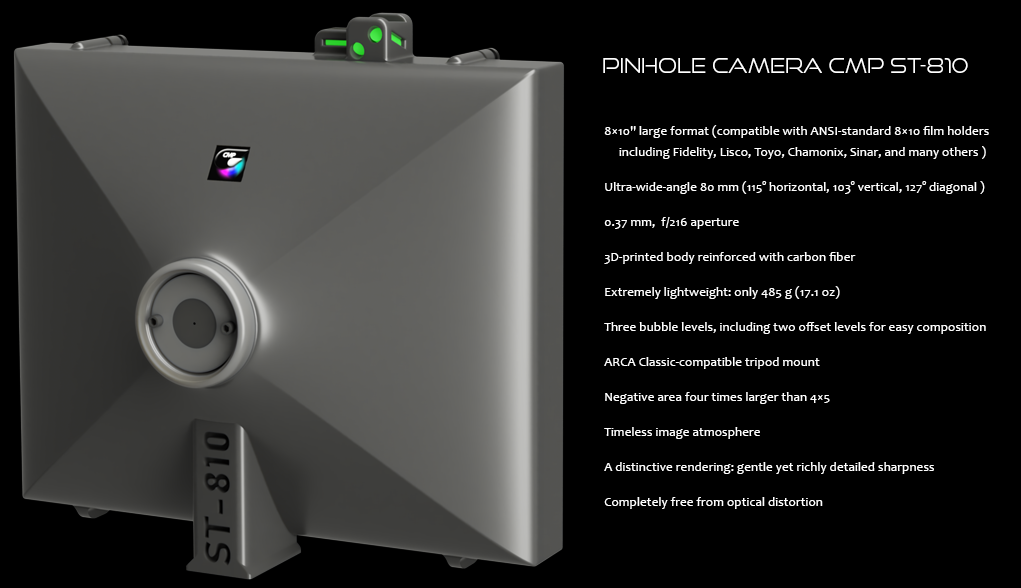
The CMP ST-810 Pinhole camera (8x10 inch format) is delivered ready-to-use ( 8x10 film holders are not supplied ), the tripod mount is in Arca Classic format, a standard tripod adapter for Kodak screw is available as an option.

standard tripod adapter
( tripod with standard kodak screw to ARCA Classic camera mount )
Paypal is the easiest way to make your payment, and shipping will be made very soon, For USA shipping customers, the US taxes have to be paid with the shipping price and you won't have to may anything more when receiving your order.
|
CMP ST-810 284.50 € |
|
|
SHIPPING TO USA |
|
|
Tripod adapter Arca / Kodak screw 24,50 € ttc |
|
Copyright(c) 2026 christophe métairie photographie. Tous droits réservés.