








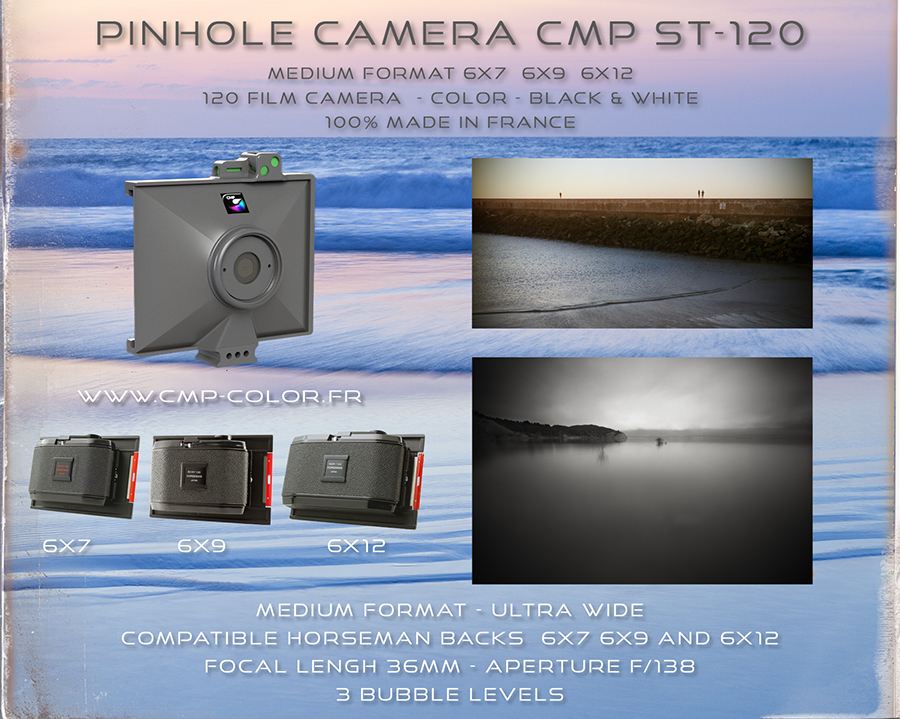
 CMP ST-120 – Medium Format 120 Pinhole Camera
The CMP ST-120 is a precision pinhole camera designed for medium format photography using 120 film. Its 36 mm focal length provides a wide-angle perspective while the f/138 aperture produces the distinctive rendering associated with pinhole photography.
The ST-120 is designed to work with 6×7, 6×9 and 6×12 film formats, offering photographers different framing options while using the same pinhole camera.
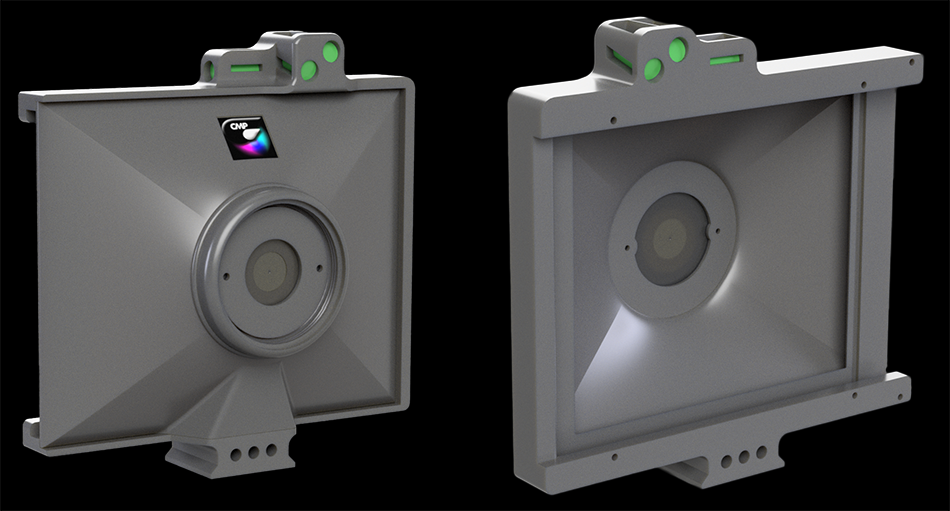
design / 3D modeling
Pinhole camera CMP ST-120 - film 120, compatible with 6x7, 6x9 and 6x12 HORSEMAN
FILM BACKS
focal length 36mm, diaphragm f/138
field of view:
- 6x7 - 104° ( equivalent 35mm 17mm )
- 6x9 - 112° ( equivalent 35mm 15mm )
- 6x12 - 123° ( equivalent 35mm 12mm )
NEW: new nano-tube-based internal coating
99.6% absorption of internal light reflections
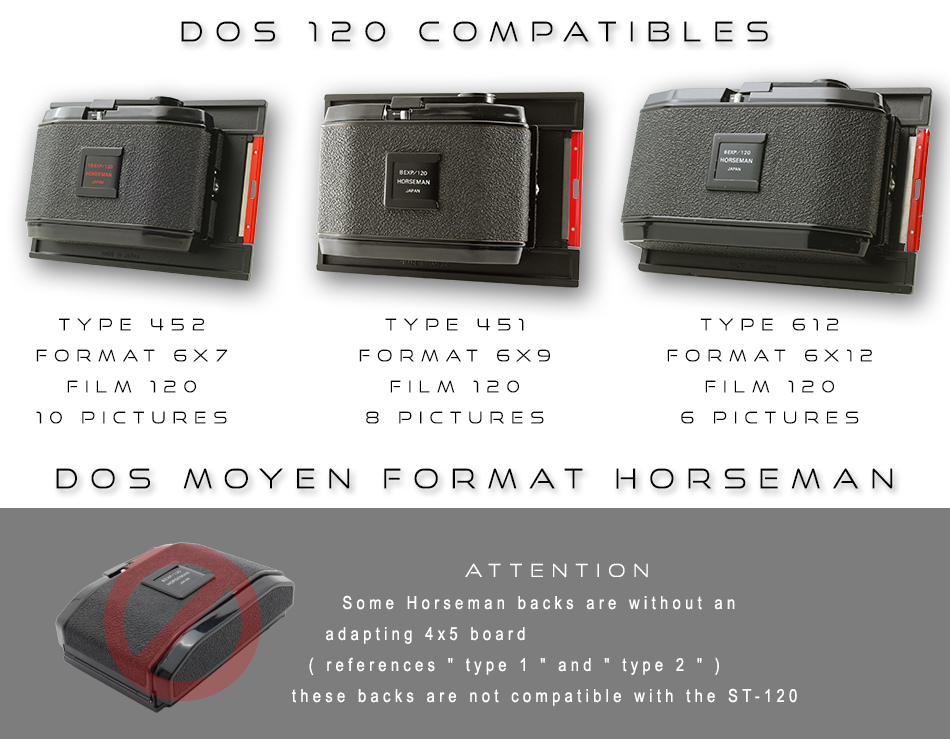
CMP ST-120 - Technical SpecificationsThe CMP ST-120 body measures 16.5 x 16 x 7cm and weighs 185 grs (700 grs with a 6x9 back), therefore very compact and very light. It accepts the medium backs Horseman format referenced #452 ( film 120, format 6x7 ), #451 ( film 120, format 6x9 ) and #612 ( film 120, format 6x12 ), a tripod mount in Arca Swiss Classic format is integrated into the case. This type of device-tripod connection is particularly reliable has become a standard in the professional world. An adapter is available as an option for tripods using the standard Kodak screw.
The material used for 3D printing of the CMP ST-120 is a biopolymer made in Austria, based on 100% renewable and purely natural organic compounds. Neutral in CO2, biodegradable and therefore quite in the era of time! A new nano-tube-based internal coating absorbs 99.6% of internal light reflections. A deep matte black paint based on silicone resin finishes the external finish of the camera.
The focal length being fixed at 36mm, the angle of field varies according to the back that is mounted on the housing: the larger the size of the window and the wider the field angle, so we will have a field angle of 104° in 6x7, 112° in 6x9 and 123° at 6x12. This without any optical deformation since the system does not have any lenses.
A pinhole camera not having a viewfinder, the only framing indications are provided by the levels present on the upper face. On the CMP ST-120, 3 levels are integrated:
- a horizontal level (horizon setting)
- two offset vertical levels: the angle of the 2 levels has been calculated so that the bubble of the left level is good when the horizon is at the upper third on the framed image. Similarly, the right-level bubble indicates that the horizon will be at the bottom third of the photograph. These 2 indications are a valuable help for framing in the absence of viewfinder since it is very easy to position the horizon at the top or bottom third of the image according to the indications of the left or right levels.

The pinhole (the hole through which the light passes) is manufactured by the Breton company StenoCaméra which is renowned for manufacturing the best pinholes on the market. Its diameter of 0.26mm was chosen according to the focal length and the format of the film used on the ST-120.

120 Film - Medium Format Photography: 6×7, 6×9 and 6×12 FormatsThe Horseman back is not supplied with the CMP camera but these models are quite common and are easily to find on the used market. On average the backs #451 ( 6x9 ) and #452 ( 6x7 ) are worth between 100 and 220 € depending on their appearance, the back 6x12 ( #612 ) is much more expensive since it usually revolves around 750 €!! The Horseman brand is reliable and its backs 120 are renowned for quality: fluid mechanics, excellent film flatness, counter of views, safety to the arming, everything is there to practice in peace. Attention there are the same Horseman backs without an adapting 4x5 board ( references " type 1 " and " type 2 " ), these backs are not compatible with the ST-120.
Compared to the 4x5 film, the big advantage of the film 120 is that it develops much more simply: in general the development tanks (jobo, patterson ...) for 35mm film are also compatible with the 120 film ( film holders have a variable height that can adapt both to the 35mm and to the 120) and the use of color films is simplified since the photo lab still present in our cities develop both 35 mm color films and 120-format color films (the machines are all compatible 35/120).
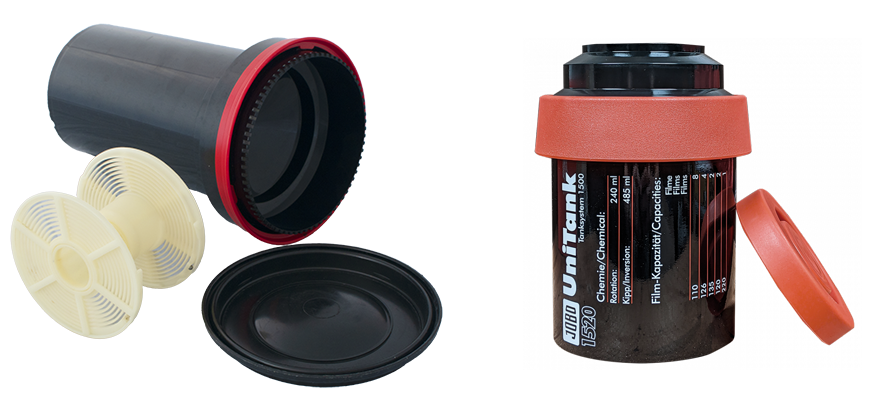
the famous Jobo or Patterson tanks make it very easy to develop the 120 black and white films
a real pleasure to use, these tanks allow a development in broad daylight
the Jobo Unitank 1520 tank allows to develop 2 film 120 with 0.5 liters of product (reusable )
Pinhole Photography with the CMP ST-120Taking pictures with a 120 pinhole camera is a real pleasure, after having practiced in recent years with medium format digital material, I must say that rediscovering the film black and white with a pinhole is very positive: here no sights, no electronics, no question on the depth of field or the focus. The only things we have to focus on are the point of view and the measurement of light. It is a photograph going to the essentials and it is good to come back sometimes!
You will surely have noticed that there is no shutter on this pinhole, it is the ancestral technique of the "cap" that is used: a cap is placed in front of the pinhole: after removing the cap the exposure begins. A the end of the exposure time the cap is put back on the pinhole. Posing times ranging from a few seconds in full sun to several minutes if the day is cloudy, a manual closure accuracy of the order of the second is largely sufficient.
Imagine that we are at an aperture of f/8, the opening of the ST-120 being of f/138 this corresponds to closing still of 8 diaphragms with respect to f/8 and there is a lot to bet that the exposure time calculated by the cell will be outside the reciprocity zone of the film, it will be necessary therefore add exposure time in order to compensate the gap the reciprocity of the film you use. We therefore arrive very quickly at exposure times of several minutes, giving an inimitable cachet to the images but largely complicating the calculation of the final exposure time of the image!
Exposure and Reciprocity Failure|
EXPLANATION OF THE RECIPROCITY LAW AND THE GAP TO RECIPROCITY
|
||||
|
when using silver film, a film reacted linearly according to the amount of light that reaches it and its exposure time:!
This direct and linear relationship between the amount of light that reaches the sensitive surface (the film) and its exposure time characterizes the law of reciprocity. But it is only valid in a given exposure time range, for ultra short exposure times (e.g. 1/10,000th of a second ) or long (e.g. 100 seconds ) this law no longer applies and the time given by the cell will have to be corrected. Film manufacturers generally give the values of the reciprocity range in the technical pdf of the film, within this time range, no additional correction is to be made, but outside this time range the exposure time given by the cell will have to be corrected. This is called the deviation from reciprocity or also the Schwarzschild effect. |
||||
|
KODAK TRIX 320 |
FOMAPAN 100 |
With a stenopey at the opening of f/138, it is not uncommon to release the reciprocity range lightly, to help you we provide you with a summary sheet for common films that will allow you to have your final exposure time easily: the simplest is to make a measurement of light with a digital housing or a hand cell (diaphragm on f/22 and sensitivity on that of the film used) and then to read the line corresponding to the exposure time given by the cell. for example, using the Kodak TriX 320 (left part of the table) if the measurement of your cell at f/22 ( iso 320 ) gives you 1/30th of a second, it will be necessary to lay 3 seconds with the pinhole (discrepancy to the reciprocity included ) Another example, using FOMAPAN 100 film, if your digital case gives you 1 second to f/22 ( iso 100 ) then you will have to put 7 minutes and 8 seconds with the pinhole, We can easily see on the paintings that the gap to reciprocity very quickly raises the exposure times, so it is imperative to take into account this correction! the kodak site for the technical information pdfs of the films:
the Ilford website for the technical information pdfs of the films:
|
||
|
f/22 measure |
Final Expo |
f/22 measure |
Final Expo |
|
|
1/1000 |
1/30 |
1/1000 |
1/30 |
|
|
1/500 |
1/15 |
1/500 |
1/15 |
|
|
1/250 |
1/8 |
1/250 |
1/8 |
|
|
1/125 |
1/4 |
1/125 |
1/4 |
|
|
1/60 |
1/2 |
1/60 |
1/2 |
|
|
1/30 |
3 sec |
1/30 |
4.5 sec |
|
|
1/15 |
10 sec |
1/15 |
15 sec |
|
|
1/8 |
21 sec |
1/8 |
34 sec |
|
|
1/4 |
49 sec |
1/4 |
1 min 20 sec |
|
|
1/2 |
2 min |
1/2 |
3 min |
|
|
1 sec |
5 min |
1 sec |
7 min 8 sec |
|
|
2 sec |
14 min |
2 sec |
18 min 39 sec |
|
|
4 sec |
43 min |
4 sec |
54 min |
|
|
8 sec |
2h 28 min |
8 sec |
3 hours |
|
If you are using an iPhone, the PINHOLE ASSIST app is really excellent: it allows you to enter the actual diaphragm of your pinhole, fill in the film used and use the built-in camera as a cell. The exposure time is then calculated, taking into account the deviation from the reciprocity Please! Please! For the most motivated, it is even possible to enter your own reciprocity curves!

PINHOLE ASSIST application
for the measurement of light
calculation of the deviation to the reciprocity of the film used
If you use an Android phone, Pinehole Assist is not available but a free application like LightMeter Free (from WP PHOTO) allows you to make a measurement of light and then to manually postpone this measurement to have the correction of the deviation to reciprocity. A little less convenient to use than under iPhone but it works.
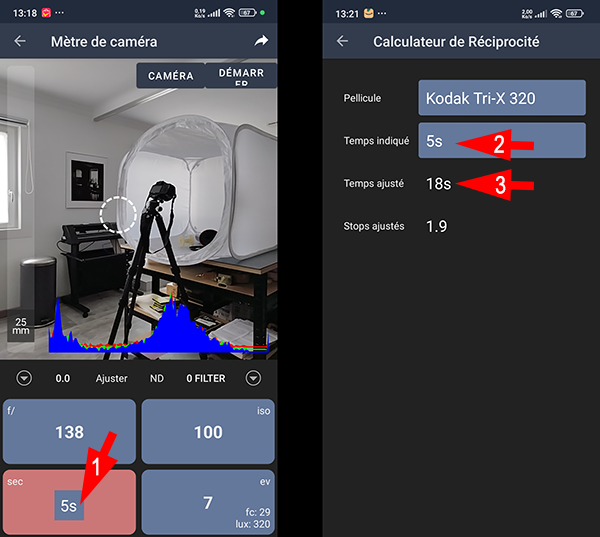
LightMeter Free from WP Photo app on Android
light measurement cell, exposure time is given (red arrow 1 )
then carried manually into the reciprocity computer (red arrow 2 )
the final exposure time is then known (red arrow 3 )
It will therefore be necessary to lay 18 seconds for our pinhole ( f/138, iso 100, triX320 film)
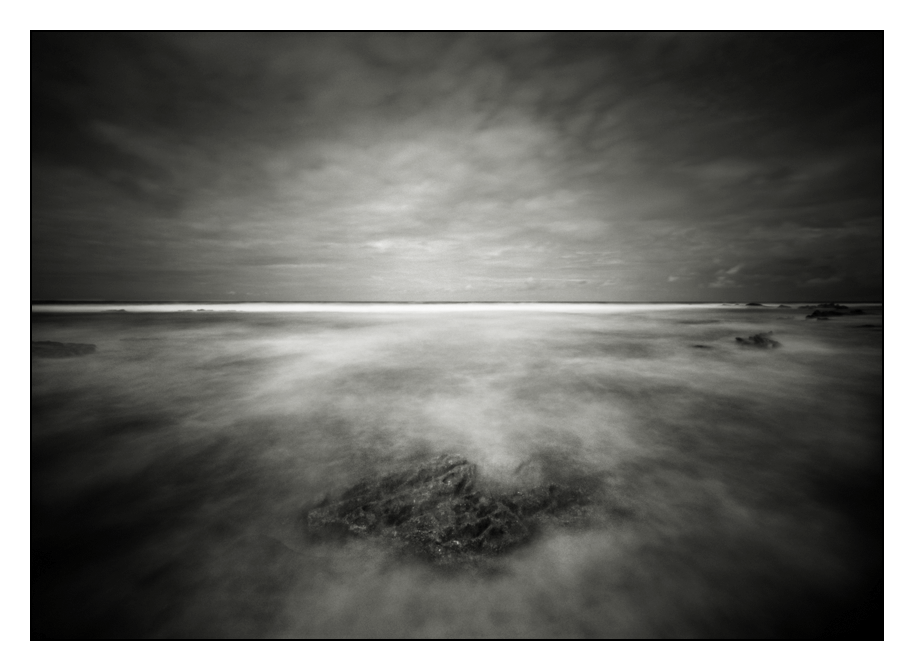
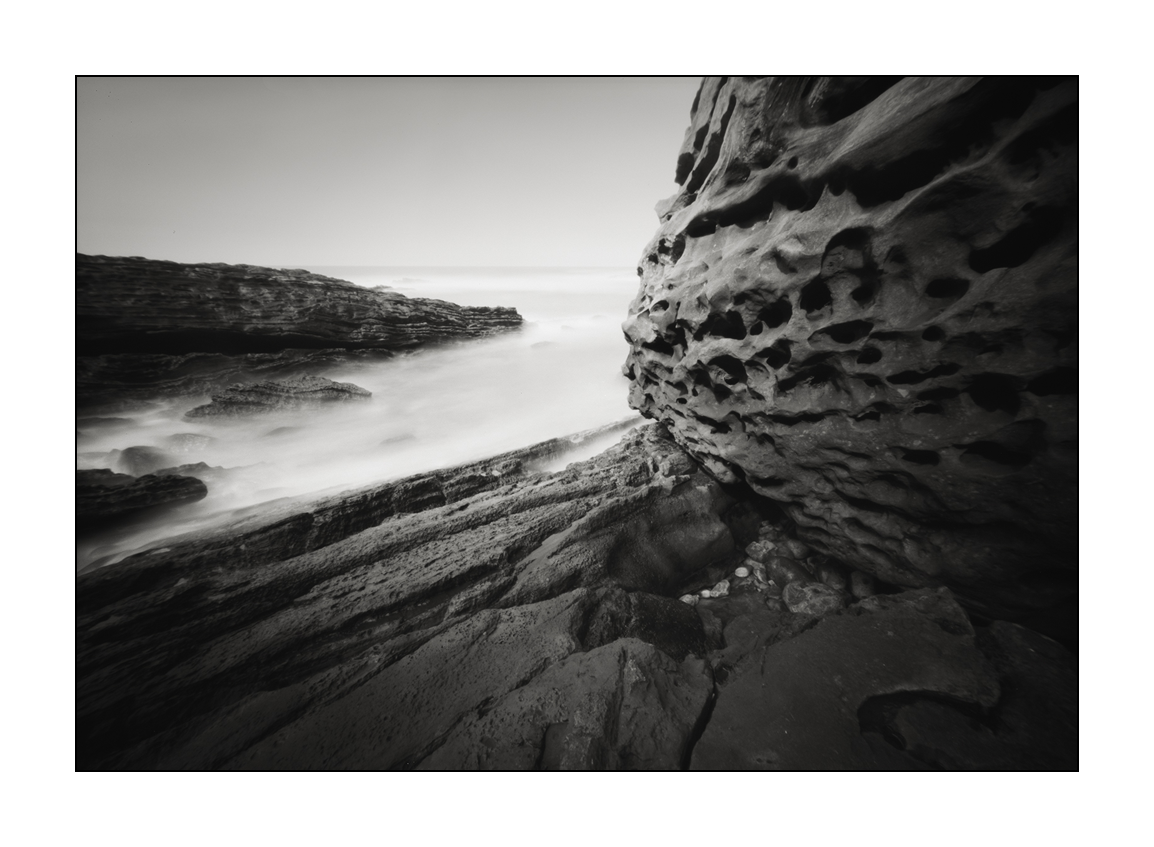
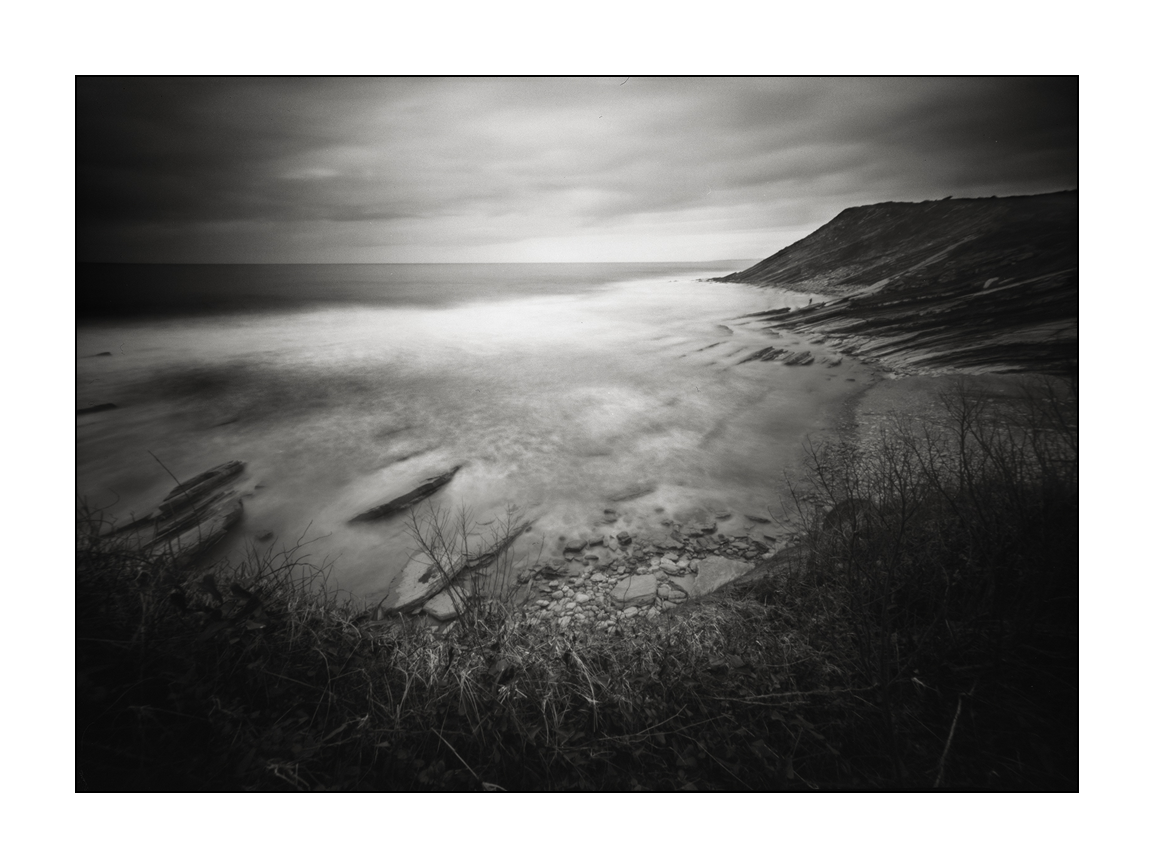
The pictures made with the ST-120The rendering of the pinhole in medium format is very pleasant: the depth of field is infinite and the image is defined enough to have a feeling of detail, the blurs and vignetting on the edges and corners of the print are particularly aesthetic. Like I said at the beginning of this article, it is clear that even the center of the prints is largely less sharp than if the photo had been made with a digital box with 20 million pixels, but that is not the purpose of the operation! Moreover, the absence of a complex objective allows the reproduction of the perspective in a very natural way despite the very open field angles, something which is not possible on a system comprising a conventional optic.
Practicing film photography with a medium-format pinhole camera can seem anachronistic: yes, it is precisely this shift that allows you to work differently and produce images with this particular aspect. Added to the particularity of the rendering the pleasure of working in medium silver format, after several years in digital is a real pleasure to find the darkroom and the smells of black and white chemistry!
The negatives from a stenopee are scanned very easily: here no need for very high resolution to draw all the information present on the film, between 1200 and 2000 dpi will be sufficient and a flatbed scanner equipped with a back for transparent (like the Epson V700 or equivalent) will be perfectly adapted.
Pricing
The ST-120 pinhole camera is delivered ready for use (the Horseman back is not provided), the tripod mount is in Arca Classic format, a "standard" tripod adapter with the kodak screw thread is available as an option. Optionally, a padded fabric protective bag.can be provided.

Standard Tripod Adapter (No Kodak Screws)
Paypal is the easiest way to make your payment, and shipping will be made very soon, For USA shipping customers, the US taxes have to be paid with the shipping price and you won't have to may anything more when receiving your order.
|
CMP ST-120 164,50 € |
|
|
SHIPPING TO USA |
|
|
padded fabric protective bag - CMP ST-120 19,50 € |
|
|
Tripod ARCA-SWISS / KODAK screw adapter 24,50 €
|
Copyright(c) 2026 christophe métairie photographie. Tous droits réservés.